


Investing in smart manufacturing models with 2 goals: responding to risks and following the 4.0 trend
Investing in transforming factories to become smarter is a global trend to operate in the new normal context.
The rise of smart homes
YKK is a zipper manufacturing and trading company with a revenue of more than 14 million USD/year. The company has factories in Hanoi and Ho Chi Minh City. In 2009, Mr. Toru Shikita, General Director of YKK, took up a mission in Vietnam and he still saw the scene of orders piling up overnight on the desk like when he was working in Shanghai. After being screened, it took from 4 days to 1 week for the orders to be entered into the Company’s main system and that was a problem when customers wanted faster transaction times. The company could not force employees to work faster.
According to ABeam, a Japanese digital transformation solution provider, in 2018, YKK Vietnam developed RPA (Robotic Process Automation) to handle the order receiving and input process. In the first 10 weeks, there were 3 more robots and less than a year later, this number had increased to 50. More importantly, this work freed up the human resources for order data entry, which were university graduates who could focus on more productive tasks for YKK Vietnam.

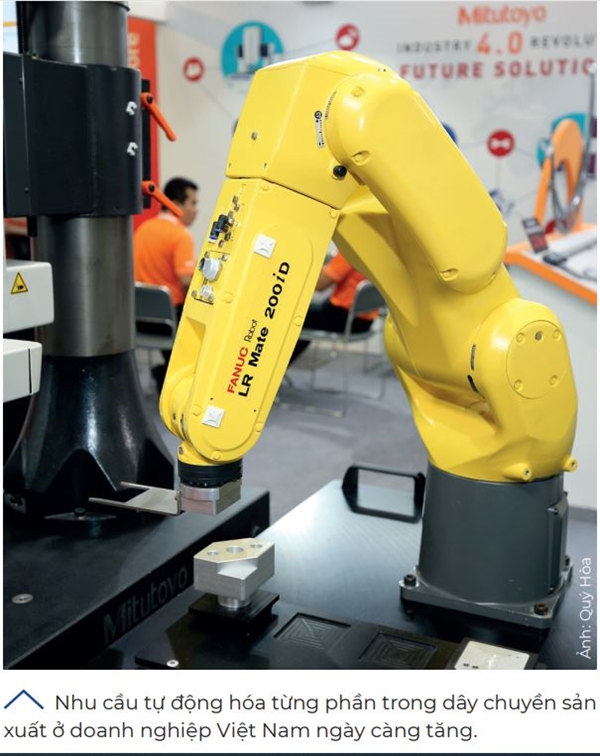
Partial automation of factory processes like YKK Vietnam is a step towards the smart factory trend that is taking place very strongly globally, especially when the COVID-19 pandemic outbreak caused disruptions in many production processes.
According to MarketsandMarkets, the global smart factory market is estimated to grow from $181.3 billion in 2020 to $220.4 billion in 2025, with a CAGR of 4%.
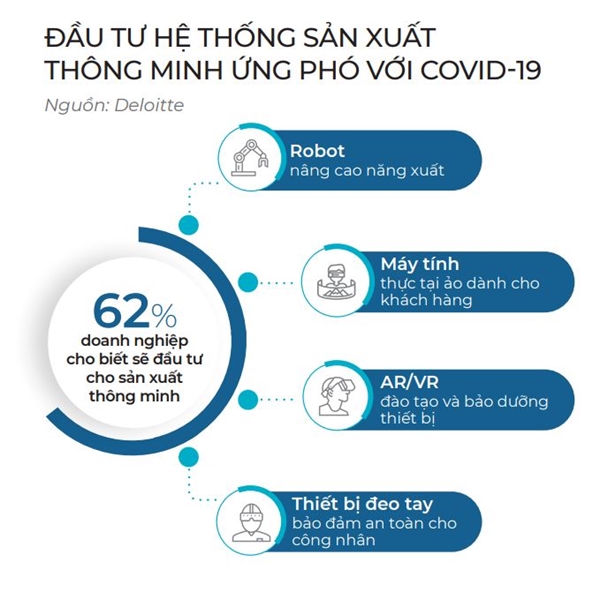
The post-COVID-19 world is driving manufacturing businesses to adopt robotics technology in their strategies to adapt to new measures. Investment is needed to find smarter manufacturing solutions in the context of not using too much labor due to social distancing orders but still ensuring production productivity. A study by Deloitte shows that 68% of business leaders globally have used automation to cope with the impact of COVID-19. Currently, 73% of organizations worldwide are using automation technology.
According to Deloitte, many US companies invest in smart devices worn by employees to alert them when they are violating the minimum safety distance, use more collaborative robots to reduce staff, or use 3D technology to “guide” customers on factory tours. To manage product quality in supply chains outside the territory, Japanese companies also share experience data and actions through technology platforms. For example, Japanese companies conduct in-depth interviews with artisans in the field about how they create quality products. This document will then be compiled into the languages of the country where they have factories.
The most interesting is the sharing of action experience, whereby the workers’ working operations will be recorded by sensors and these indicators will be compared with standard indicators. Each stage will have a different standard indicator. This process helps ensure standardization of each step until the product is completed. There are about 100 high-quality cameras installed to serve this process.
Hitachi, a manufacturer of railway and industrial equipment, has adopted this process to meet the requirements of human distancing during the pandemic while maintaining production capacity. Similarly, since 2019, Volkswagen has developed the Volkswagen Industrial Cloud, an open platform to combine data from all information about machines and factories across the Group’s 122 facilities. The goal of the collection is to improve the assembly process and connect this data with 1,500 suppliers and partners worldwide.
According to Deloitte, despite reducing the number of workers, the report shows that labor productivity in smart factories can increase with a CARG of 2.3% in the period 2025-2030, close to the growth rate that global factories achieved in the 1990s. This is an indicator that many manufacturers are really interested in in the context of the impact of the pandemic that has not stopped.
“What is the new normal for us? It is that demand for goods can increase or decrease in a short period of time and we need a factory that is flexible enough to adapt to that,” Deloitte quoted a business owner in the report.
Shortcut for Vietnam
The risk of production disruption and production suspension due to the spread of the epidemic in industrial zones further demonstrates the important role of smart factories. Looking further, modern production processes are the solution to the problem of enhancing Vietnam’s value and position in the supply chain. The 4.0 industrial revolution is creating major changes on an unprecedented scale due to the shift of a number of factors such as technological innovation, production characteristics and working environment. This trend helps Vietnam take a shortcut in its modern production transformation strategy.
 |
According to PwC, factories in Vietnam mainly operate in three sectors: electronics, apparel, footwear and agriculture. Textile and garment enterprises account for the majority and 50% of them are small and medium enterprises. Because they participate in the lowest stage in the value chain, most companies employ a lot of labor. For labor-intensive factories like Vietnam, whether the process of moving to a smart factory is feasible is a question that many businesses are interested in. There is no exact answer but depends on the businesses leading the supply chain.
According to Deloitte’s report, most manufacturers measure the value of partners in the ecosystem based on indicators related to productivity or efficiency. This can be implied that when businesses leading the supply chain move to a smart factory, there will be pressure for suppliers who want to join their supply chain.
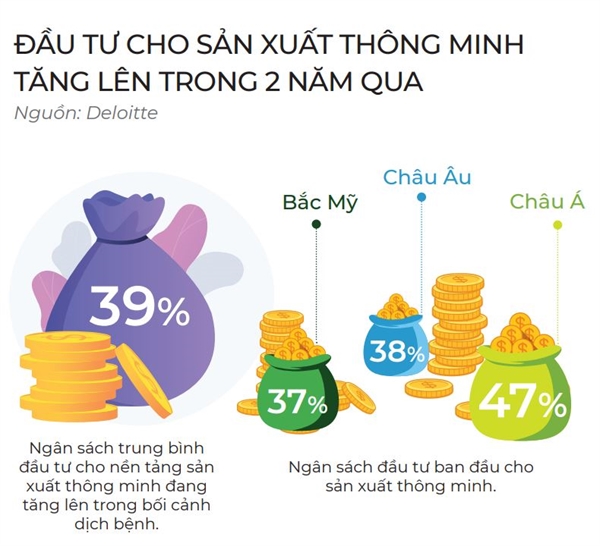
In fact, 57% of factories in Asia surveyed said their manufacturing facilities may not be suitable in the next 2 years; 83% of factory owners in Asia believe that the key to future success is a collaborative approach. Therefore, this group has a proportion of investment in factory improvement up to 47%, higher than Europe (38%) and North America (37%).
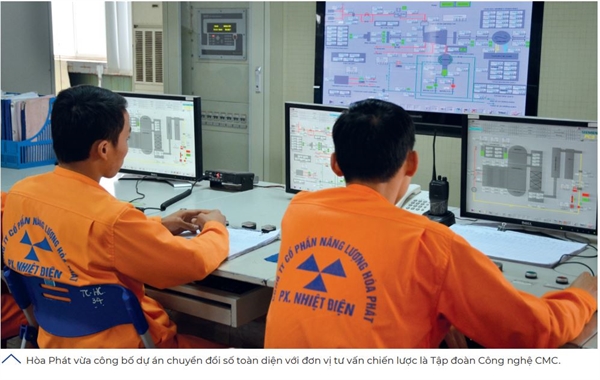
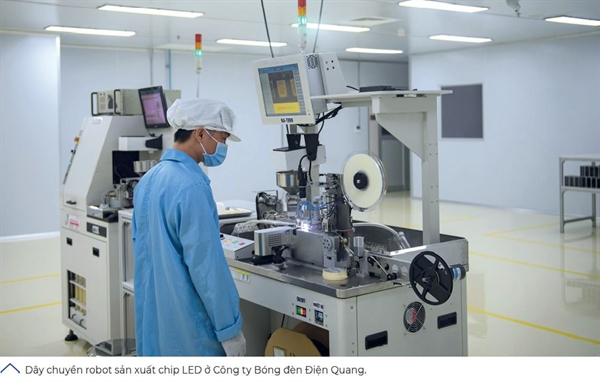
In Vietnam, many units have begun to consider digital transformation – one of the first steps towards a smart factory – as a matter of survival. Recently, Hoa Phat Group announced its participation in a comprehensive digital transformation from infrastructure, security, applications to new technologies (Big Data, IoT, automation, ERP, supply chain management …) to meet the needs of transformation in operations, administration and business. Previously, many other manufacturing enterprises in Vietnam also participated in digitalization such as Austdoor, Duc Giang, Thach Ban, Dien Quang…
Notably, currently 30% of large enterprises in the textile and garment industry apply automation technology to each stage of production. Mr. Pham Van Viet, Chairman of the Board of Directors of Viet Thang Jean, said that automation technology connected on the internet platform is gradually replacing workers on production lines and in the entire textile and garment supply chain. The newly invested technology equipment system of Viet Thang Jean has replaced the positions of 800 workers. According to calculations, on average, a laser machine using automatic technology, high technology in garment can replace 49 manual sewing workers.
According to Mr. Nguyen Anh Tuan, Director of Dai Phuc Vinh Company, many wood industry enterprises invest in modern wood processing machinery and technology such as AA Tay Ninh, Minh Thanh, Minh Phat… and create a breakthrough in capacity. For example, previously, to produce 1,000 chairs/day, it required 500 workers and about 6,000 m2 of factory space, but now with the new production line, it only requires 200 workers and 3,000 m2 of factory space.
According to Schneider Electric Vietnam, smart factories have developed rapidly, especially in highly competitive markets and industries. The concept of Dark Factory has emerged in the world – a smart factory capable of fully automated production and operation and operating 24/7. Vietnam is becoming the world’s manufacturing factory in attracting a wave of FDI investment, helping industrial parks to increasingly expand in scale and increase occupancy rates.
This development offers investors many options suitable for their production and operation strategies in Vietnam. Vietnam’s young and dynamic workforce with the ability to learn quickly, be trained in skills and have the right investment has been able to participate in the global industrial technology and supply chain. This platform helps Vietnam accelerate the development of modern manufacturing, catching up with the latest technology trends in the world.
Mr. Naoyuki Morimoto, Deputy General Director of Schneider Industrial Automation Vietnam, said that with the impact of the COVID-19 pandemic on the economy and especially the industry in Asia, digitalization and factory automation can reduce the burden on businesses, help maximize operational efficiency, gain market share and manage remote processes. The application of Smart Factory will solve 6 weaknesses of enterprises and provide effective solutions for the production process from end to end, including: Flexible management, Efficient process, Equipment condition management, Operational empowerment, Reliability, Energy efficiency. “COVID has helped accelerate the digital transformation process that businesses were implementing before the pandemic. Now, with a world where everything is operating remotely, businesses in the global industrial manufacturing industry must quickly adapt to working conditions that are no longer normal,” said Mr. Naoyuki Morimoto.
 |
“The pandemic has also encouraged businesses to adopt new technologies and upgrade their business models. For example, the lockdown of workers may encourage businesses to automate certain functions, encourage digitalization and the use of online platforms… and boost e-commerce,” said Victoria Kwakwa, Vice President, East Asia and Pacific, World Bank.
 |
The COVID-19 pandemic and Vietnam’s participation in trade agreements such as EVFTA and CPTPP have made competition even fiercer. Therefore, businesses must seek solutions to both reduce costs and improve operational efficiency. “We are seeing VinFast investing heavily in robotics and automation – a clear signal of the opportunities that are emerging for domestic manufacturers willing to invest in technology and innovation,” said Associate Professor Jerry Watkins, Center for Digital Excellence at RMIT University.
Speaking to NCĐT, Mr. Nguyen Duc Phuong, Senior Manager of ABeam, said that current technology can partly solve the problem of labor intensity. For example, digital twins, which are a boost in product lifecycle management, from design, production and operation. In addition, solutions such as robotic process automation can be used to perform routine and time-consuming tasks, thereby allowing factory workers to focus on more creative tasks.
The issue that Vietnamese businesses need to pay attention to, according to Mr. Phuong, is how to avoid getting lost in the myriad of solutions available today. This will also make it easier for businesses to seek support from experts in the field, instead of relying on the digital transformation program of internal employees, who are already very busy with their daily work.
Last but not least, businesses should try to start small and achieve quick, measurable results to identify breakthrough initiatives. “Don’t be afraid of failure, but persevere in building a culture of learning, making continuous efforts, overcoming failures and moving forward,” Mr. Phuong advised.
The OECD’s Future of Work report also stated that automation, robotics and globalization are rapidly transforming the workplace and that governments must act decisively to counteract the impact of these changes, or face increasingly severe economic and social pressures. Once again, the disruption in production due to the pandemic makes this warning even more urgent for the future of Vietnamese businesses. “The role of technology is growing and expanding, but smart factories are empowering the workforce, not replacing it. Automation and IoT technology can increase work efficiency and empower human resources by creating greater efficiency and helping to automate monotonous tasks so that humans can provide appropriate direction and control,” Schneider’s leader emphasized.
